

Trusting the Process
How I'm Learning to Let Go and Let Be
Lindsy O'Brien
2/3/20254 min read
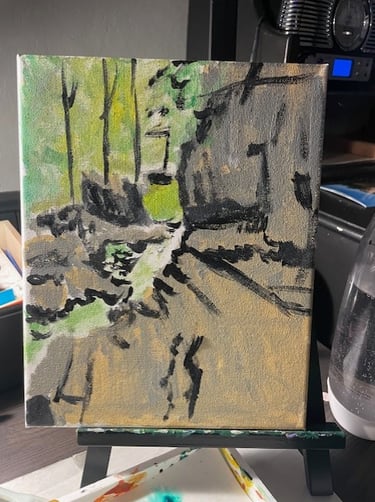
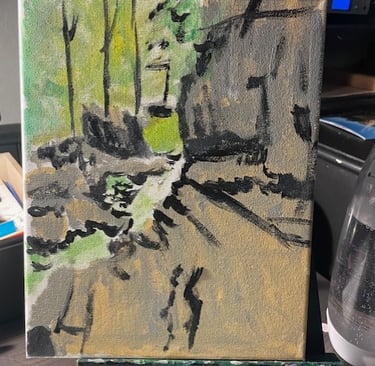
This past fall, I was on sabbatical from my English teaching job. My sabbatical project was focused on a redesign of my Creative Writing Course using practices rooted in creativity theory. To support me in reconsidering my own creative processed, I decided to take Drawing I and Painting I at my college from one of my colleauges.
I've been drawing for some time, but I consider myself to be very much a beginner. My sister, Kelly O. Beaster, is a successful artist in the Duluth area and has been drawing since she was small. When our mother handed me a journal when I was six, she handed my sister a sketchbook. We both have skills in writing and in art, but we've both really stuck with the creative genre we first identified with. Pushing myself into the art world this fall was scary, especially when it came to painting which I had little to no experience with. I was in class with folks who had been my students the semester before (and would be my students in the coming semesters, I was to find out). It was scary and uncomfortable to step into that space.
My unexpected sabbatical project was my divorce. My art classes became a refuge from the intensity of my life last fall. Sometimes I would lose myself so much in the work that, when it was time to clean up after a class period, the rush of reality would hit me so hard that I wasn't sure I could get back on my feet.
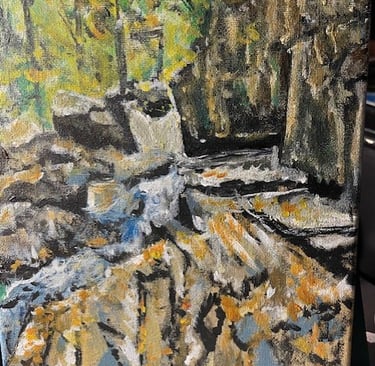
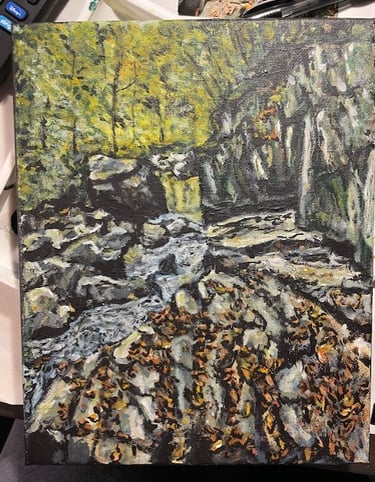
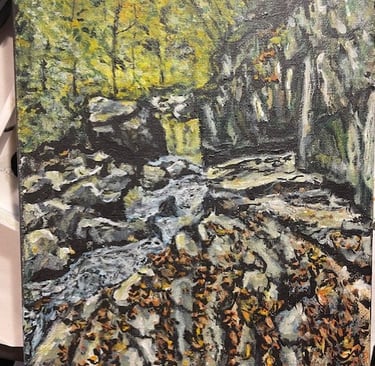
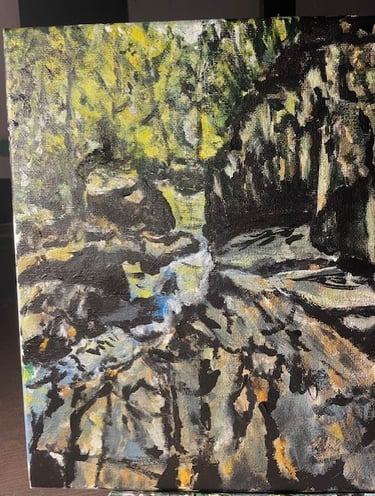
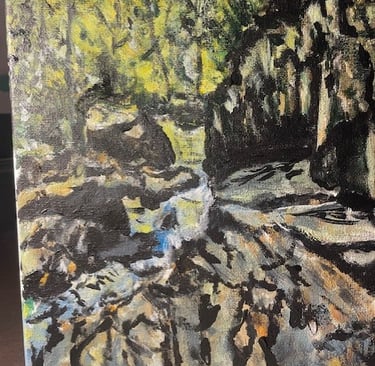
After the classes finished for the semester, I tried to continue painting a bit on my own. This series above started with a photo I took of a spot on the Lake Superior College trails along Miller Creek. I swear this nook has been a sacred place for people for generations; it reasonates with an indescrible something that feels deep and ancient and sentient. I'd first sketched the outline of the shapes in the photograph onto my canvas. Then, I wasn't sure what to do. I felt like I had no idea how to start or even what I thought the painting would look like in the end. So I thought I'd start with some black paint to outline the darkest bits and go from there. Then I blocked off other colors just as placeholders. It still felt like I had no idea what I was doing. Each layer, each color choice, each addition of detail felt like a leap of faith.
Luckily, acrylic paint is pretty forgiving. I've found that if I just keep at it, I can usually pile on enough paint to get to something that looks okay. In my painting class, I remember one of my fellow students looked over at my painting at the end of the class session and said "Is that the same painting you started with?" It was, but I'd completely changed the color scheme in the 90 minutes we'd been working. That sort of adjusting on my feet hasn't really come easy to me in writing because I always took my writing work so seriously. In art, I find that I can play in ways that I don't allow myself as a writer. Who cares if my painting doesn't turn out! It's just for fun! Writing, on the other hand, is serious business. That is exactly the mentality I'd hoped to break through by taking those art classes in the first place.
I'm starting to understand that I may need to make this same shift as I approach my post-divorce healing process. I've had this sense from the start that I need to just lean in and HEAL. But how do I know if I'm doing the healing right? Is there a right way to heal? I mean, there must be a wrong way, a way that keeps a wound open and festering or makes the healing take longer. But with internal healing, we can't see the blood stop gushing, the scab harden, the edges knit together, and for formation of the scar. We just have to trust it's happening and hope for the best.
Maybe healing is like my acrylic painting process. I've got to just go for the obvious bits first and then fill in the open areas as best I can. If it doesn't feel right, change it and know I can change it back again (and know it is okay if I can't get it exactly the way it was before). Try to play a little. Try to forgive myself if I mess up. Try not to throw the whole damn thing across the room.
How do we know when a painting is complete? How do we know when an internal wound has healed. I guess we just decide, don't we? And we can always go back: add more paint, cover the whole thing with a coat of white and start over, create a second painting in a whole different style. Perhaps we spend much too much time looking for how to do things right when really we just need to be in the doing.
That is something I aspire to (and I think it may be a life long aspiration).
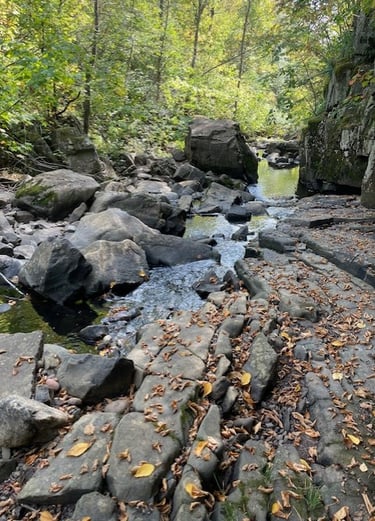

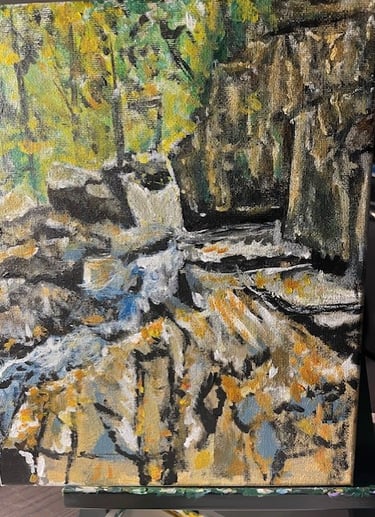
lindsy@innerforestarts.com
© 2026 All rights reserved.